What Is White Hat Link Building? Guide to Safe SEO Backlinks
Write a compelling excerpt...
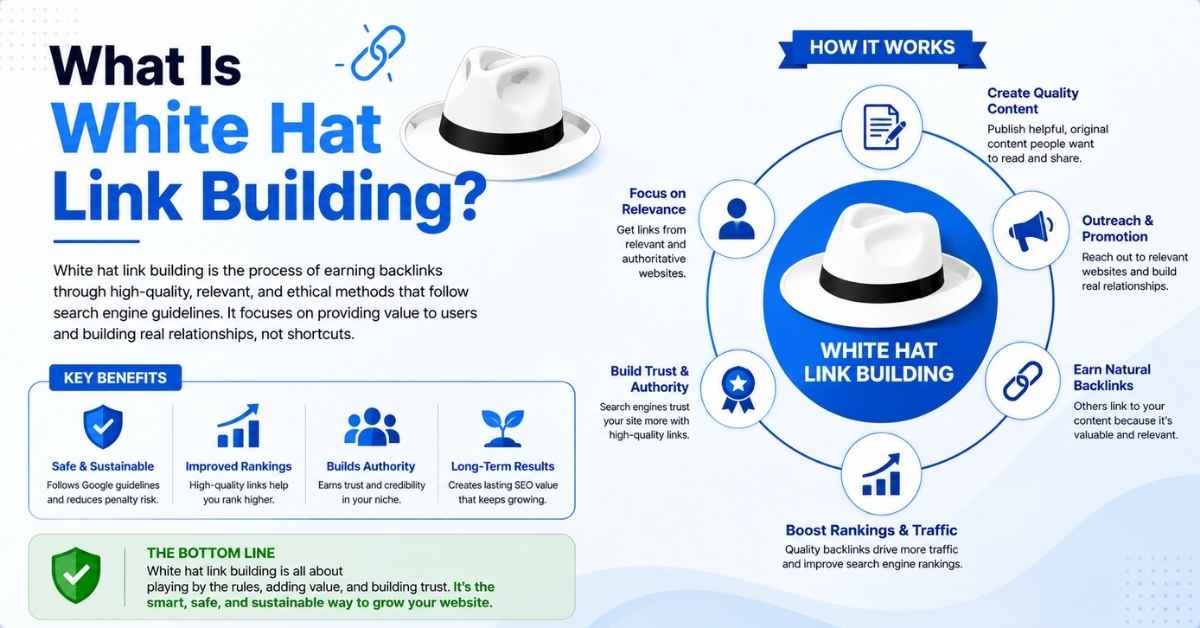
What Is White Hat Link Building? White hat link building is the process of earning high-quality, relevant backlinks through ethical SEO practices that comply with Google's Search Essentials. Instead of buying links or using manipulative tactics, it focuses on creating valuable content, building genuine relationships, and attracting editorial backlinks naturally. This sustainable approach helps improve search rankings, increase organic traffic, strengthen topical authority, and protect your website from Google penalties.
If you've ever wondered whether white hat backlinks still matter in 2026, the answer is yes. While Google's algorithms have become more sophisticated, backlinks remain one of the strongest ranking signals when they come from trustworthy, relevant websites. The key is earning links that genuinely benefit users rather than trying to manipulate search engines.
In this guide, you'll learn what white hat link building is, why it matters, how Google evaluates backlinks, and the most effective white hat link building techniques you can use to grow your website safely.
Why White Hat Link Building Still Matters in 2026
Search engine optimization has changed dramatically over the past decade, but one principle has remained consistent: Google rewards websites that earn trust. White hat link building is no longer about collecting as many backlinks as possible. Instead, it's about earning links that demonstrate authority, relevance, and value.
Unlike risky shortcuts, ethical link building builds long-term credibility. Every quality backlink acts like a recommendation from another website, helping search engines understand that your content deserves visibility.
How Google Evaluates Backlinks Today
Google doesn't simply count backlinks—it evaluates their quality.
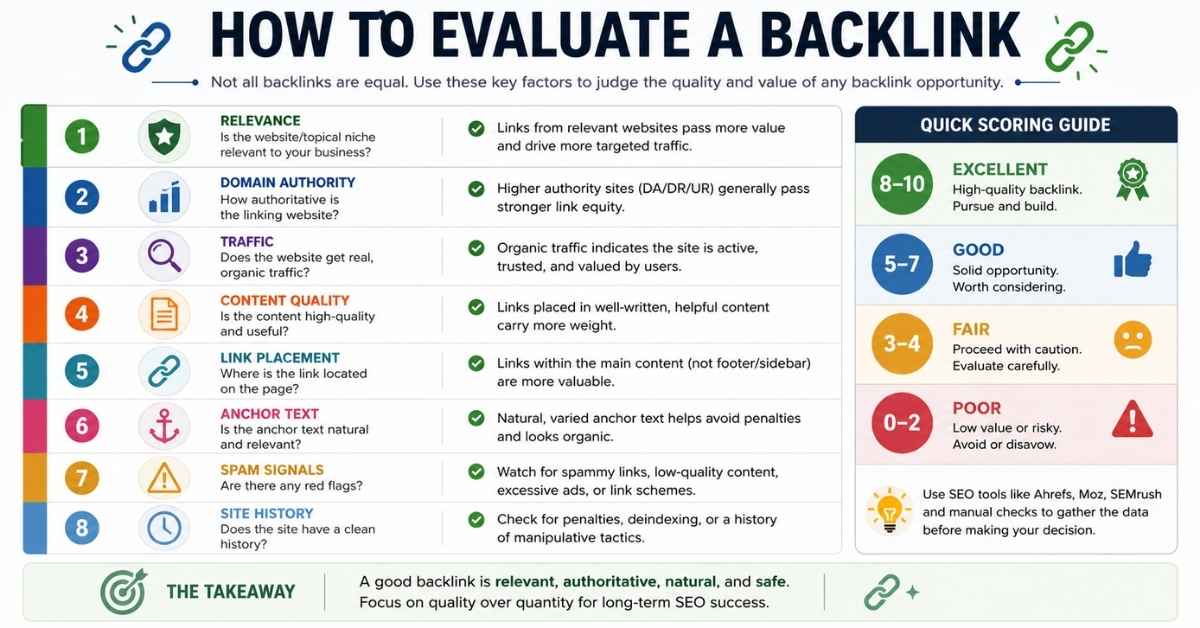
Here are the main factors that influence backlink value:
- Topical relevance between the linking page and your content.
- Editorial placement, where links are added naturally by an editor or author.
- Website authority and overall trustworthiness.
- Contextual relevance within the surrounding content.
- Natural anchor text that fits the sentence.
- User value, ensuring the link genuinely helps readers.
For example, imagine you own an SEO blog. A backlink from a respected digital marketing website discussing link building strategies carries much more value than dozens of unrelated links from low-quality directories.
Why Relevance Beats Quantity
A common misconception is that more backlinks automatically mean higher rankings. In reality, one backlink from a highly relevant, authoritative website can outperform hundreds of irrelevant links.
Think of backlinks as professional recommendations. A recommendation from an industry expert carries far more weight than dozens of endorsements from people with no expertise in your field.
The Long-Term Benefits of Ethical Link Building
Investing in white hat SEO link building offers benefits that extend beyond rankings.
Sustainable Organic Growth
Unlike manipulative tactics, ethical backlinks continue delivering value for years.
Improved Website Authority
High-quality backlinks strengthen your website's reputation and increase its perceived expertise within your niche.
Better Search Visibility
Relevant backlinks help search engines discover new content faster and understand your site's topical focus.
Higher Referral Traffic
Editorial backlinks often bring visitors who are genuinely interested in your content, products, or services.
Lower Risk of Penalties
Because white hat methods follow Google's guidelines, your website is far less likely to face algorithm updates or manual actions.
Expert Tip: Focus on earning fewer, high-quality backlinks rather than chasing large numbers. Quality consistently beats quantity in modern SEO.
White Hat vs. Gray Hat vs. Black Hat Link Building
Understanding the differences between these approaches helps you choose strategies that support long-term success.
| Feature | White Hat | Gray Hat | Black Hat |
| Google Compliance | ✅ Fully compliant | ⚠ Partially compliant | ❌ Violates guidelines |
| Risk Level | Low | Medium | High |
| Long-Term Results | Excellent | Uncertain | Poor |
| Penalty Risk | Minimal | Moderate | Very High |
| Sustainability | Long-term | Short-term | Unsustainable |
| Focus | User value | Mixed tactics | Manipulation |
White Hat Link Building
This approach focuses on earning backlinks through:
- Guest posting on relevant websites
- Digital PR
- Original research
- Resource page outreach
- Broken link building
- Valuable content marketing
- Expert collaborations
- Brand mention reclamation
These backlinks exist because your content deserves recognition.
Gray Hat Link Building
Gray hat techniques operate in uncertain territory. While they may not directly violate Google's guidelines, they often attempt to exploit ranking systems.
Examples include:
- Excessive reciprocal linking
- Large-scale guest posting solely for backlinks
- Over-optimized anchor text
- Low-quality niche edits
These tactics may work temporarily but carry increasing risks.
Black Hat Link Building
Black hat SEO intentionally manipulates search engines through prohibited methods such as:
- Buying backlinks
- Private Blog Networks (PBNs)
- Automated link building
- Link farms
- Hidden links
- Spam comments
Although these techniques may produce short-term gains, they often lead to ranking losses or Google penalties.
When Does a Strategy Stop Being White Hat?
The answer depends on intent.
For example, guest posting itself is considered a legitimate strategy. However, publishing hundreds of low-quality guest posts solely to acquire backlinks crosses into manipulative territory.
Ask yourself these questions before pursuing any backlink:
- Is the content genuinely helpful?
- Would the website publish it without the backlink?
- Does the link improve the reader's experience?
- Is the website relevant to my niche?
If the answer is yes, you're likely following a white hat SEO approach.
How White Hat Link Building Works
Successful white hat backlink strategies follow a structured process rather than relying on shortcuts.
Step 1: Create Link-Worthy Content
Everything begins with exceptional content.
People naturally link to resources that solve problems, provide original insights, or offer useful tools.
Examples include:
- Ultimate guides
- Original research
- Industry statistics
- Free templates
- Interactive calculators
- Case studies
- Infographics
- Expert interviews
This type of content is often called a linkable asset because it encourages natural backlink acquisition.
Step 2: Find Relevant Link Opportunities
After publishing valuable content, identify websites that would genuinely benefit from linking to it.
Look for:
- Industry blogs
- Resource pages
- News publications
- Educational websites
- Business associations
- Professional communities
Relevance should always come before authority.
Step 3: Build Genuine Relationships
Many beginners treat outreach as a numbers game. In reality, successful ethical link building depends on relationships.
Engage with publishers by:
- Commenting thoughtfully on their articles
- Sharing their content
- Connecting on professional platforms
- Providing value before requesting anything
Trust often leads to better editorial opportunities.
Step 4: Earn Editorial Backlinks
Editorial backlinks are among the most valuable backlinks because they are given voluntarily.
You can earn them through:
- Publishing unique research
- Offering expert opinions
- Creating useful resources
- Solving industry problems
- Providing quotable insights
These links carry significantly more weight than artificially placed backlinks.
Step 5: Monitor and Improve Your Backlink Profile
White hat link building doesn't end after acquiring backlinks.
Regularly monitor:
- Referring domains
- Anchor text diversity
- Lost backlinks
- Referral traffic
- Organic keyword growth
- Search rankings
This helps maintain a healthy backlink profile and identify new opportunities.
10 Proven White Hat Link Building Strategies
Not every strategy works equally well for every website. The best approach depends on your niche, audience, and resources.
1. Guest Posting on Relevant Websites
Guest posting remains one of the most effective white hat link building techniques when done correctly.
Focus on:
- Relevant websites
- Original content
- Editorial quality
- Genuine expertise
- Helpful information
Avoid publishing guest posts purely for backlinks.
Best for: Blogs, agencies, SaaS companies, consultants.
2. Digital PR Campaigns
Digital PR combines traditional public relations with SEO.
Create newsworthy content such as:
- Industry surveys
- Data reports
- Expert commentary
- Original research
- Trending insights
Journalists often cite these resources, generating powerful editorial backlinks.
Best for: Established brands, startups, SaaS businesses, eCommerce stores.
3. Original Research and Industry Surveys
Unique data naturally attracts backlinks.
For example:
Instead of writing another article about SEO statistics, conduct your own survey and publish exclusive findings.
Original research becomes a valuable resource that other websites reference repeatedly.
Best for: Authority websites and niche publishers.
4. Broken Link Building
Many websites unknowingly link to pages that no longer exist.
Find these broken links, create a better replacement, and politely suggest your resource to the website owner.
This strategy benefits both parties because you're helping improve their user experience while earning a relevant backlink.
5. Resource Page Outreach
Thousands of websites maintain resource pages recommending useful tools, guides, and educational content.
If your article genuinely adds value, reach out and explain why it deserves inclusion.
This strategy works especially well for:
- Educational content
- Free tools
- Comprehensive guides
- Industry checklists
- Templates
6. Brand Mention Reclamation
Sometimes websites mention your business without linking to it.
Identify these mentions and politely request that they add a backlink.
Since they're already familiar with your brand, conversion rates are often much higher than cold outreach.
7. Expert Roundups and Interviews
Featuring recognized professionals in your content creates value for readers while increasing the likelihood that contributors will share and link to your article.
Expert roundups also strengthen your site's E-E-A-T by associating your content with credible voices.
8. Creating Linkable Assets
Some content naturally earns backlinks because it solves recurring problems.
Examples include:
- Free SEO checklists
- Templates
- Calculators
- Interactive tools
- Comprehensive tutorials
- Industry reports
- Downloadable resources
These assets continue attracting backlinks long after publication.
Strategic Partnerships and Collaborations
Working with complementary businesses can lead to valuable editorial mentions.
Examples include:
- Joint webinars
- Co-authored research
- Industry events
- Podcasts
- Community projects
The goal is to create something valuable enough that both audiences benefit.
Publishing Helpful Evergreen Content
Evergreen content remains useful for years, making it one of the strongest foundations for natural backlinks.
Examples include:
- Complete beginner guides
- Step-by-step tutorials
- Ultimate resource pages
- Industry glossaries
- Frequently updated reference articles
The more helpful your content becomes, the more likely other websites will reference it as a trusted resource.
Key Takeaway: The most successful white hat link building strategy isn't chasing backlinks—it's creating content worth recommending and building authentic relationships within your industry. This approach aligns with Google's emphasis on helpful, user-first content and delivers sustainable SEO results over time.
What Makes a High-Quality White Hat Backlink?
Not every backlink has the same SEO value. A single backlink from a trusted, relevant website can contribute more to your rankings than dozens of links from low-quality sources. Instead of chasing numbers, focus on earning backlinks that meet Google's quality expectations.
Topical Relevance
A backlink should come from a website that covers topics related to your niche. For example, an SEO blog linking to your article about white hat link building is much more valuable than an unrelated entertainment website.
Website Authority
Backlinks from respected, trustworthy websites carry more weight because they have built credibility over time. While metrics like Domain Authority (DA) and Domain Rating (DR) can be helpful indicators, they should never be the only factors you consider.
Editorial Placement
The strongest backlinks are editorial links. These are naturally placed within valuable content because the author believes your page improves the reader's experience.
Contextual Anchor Text
Anchor text should fit naturally within the sentence. Over-optimizing anchor text with exact-match keywords can appear manipulative. A diverse and natural anchor text profile is much healthier.
Referral Traffic Potential
A quality backlink should do more than improve rankings—it should also bring relevant visitors to your website. Links placed on pages with engaged audiences often generate valuable referral traffic.
Quick Backlink Quality Checklist
Before pursuing a backlink, ask yourself:
- ✅ Is the website relevant to my niche?
- ✅ Does it have genuine readers?
- ✅ Is the backlink placed naturally within helpful content?
- ✅ Would I still want this link even if search engines didn't exist?
- ✅ Does it improve the reader's experience?
If you answer "Yes" to most of these questions, the backlink is likely worth pursuing.
Common White Hat Link Building Mistakes to Avoid
Even ethical SEO can fail when executed poorly. Avoiding these common mistakes will help you build a stronger and more sustainable backlink profile.
Prioritizing Quantity Over Quality
Many beginners believe more backlinks automatically lead to higher rankings. In reality, quality always outweighs quantity.
Sending Generic Outreach Emails
Website owners receive countless outreach emails every day. Personalize your messages by mentioning their content and explaining why your resource adds value.
Ignoring Topical Relevance
A backlink from an unrelated website offers little value and may confuse search engines about your website's expertise.
Over-Optimizing Anchor Text
Using the exact same keyword repeatedly as anchor text creates an unnatural backlink profile. Mix branded, partial-match, and natural anchor texts.
Publishing Thin Guest Posts
Guest posting remains an effective white hat SEO link building strategy, but only when you publish genuinely helpful, original content.
Expecting Immediate Results
White hat link building is a long-term investment. Rankings usually improve gradually as your backlink profile grows naturally.
Forgetting Relationship Building
Strong relationships often lead to repeat collaboration opportunities, editorial mentions, and future backlinks.
Pro Tip: Treat link building as networking, not selling. Helping others first often leads to the best backlink opportunities.
White Hat Link Building Examples
Understanding real-world scenarios makes it easier to apply these strategies effectively.
Example 1 – Local Business
A local plumbing company publishes a comprehensive guide on preventing frozen pipes. Local news websites and community blogs reference the guide during winter, generating natural backlinks.
Example 2 – SaaS Company
A project management software company conducts an annual productivity survey. Industry blogs, journalists, and business publications cite the findings, earning high-authority editorial backlinks.
Example 3 – E-commerce Store
An online fitness store creates an interactive calorie calculator and workout planner. Health bloggers recommend the tool, resulting in consistent backlink growth.
Example 4 – Personal Blog
A travel blogger writes a detailed destination guide with original photos and budgeting tips. Tourism websites and fellow bloggers reference the guide as a trusted resource.
Example 5 – B2B Service Website
A digital marketing agency publishes an in-depth SEO case study showing measurable results. Industry publications link to the study when discussing successful SEO campaigns.
How Long Does White Hat Link Building Take to Show Results?
One of the most common questions is "How long do backlinks take to work?"
The answer depends on several factors, including your website's authority, competition, content quality, and the strength of the backlinks you earn.
| Timeframe | What to Expect |
| Month 1–2 | Content promotion, outreach, and initial backlink acquisition. |
| Month 3–4 | Search engines begin recognizing new backlinks, and rankings may improve for less competitive keywords. |
| Month 5–6 | Noticeable growth in organic traffic and keyword visibility. |
| 6–12 Months | Stronger domain authority, increased trust, and sustainable ranking improvements. |
Remember, ethical SEO is a marathon—not a sprint. Consistency produces lasting results.
Tools That Make White Hat Link Building Easier
The right tools can simplify research, outreach, and backlink monitoring.
| Tool | Best For | Key Benefit |
| Ahrefs | Backlink analysis | Analyze backlink profiles and competitors |
| Semrush | SEO research | Find link opportunities and track rankings |
| Moz Pro | Authority metrics | Evaluate domain authority and spam score |
| Google Search Console | Performance monitoring | Monitor backlinks and search performance |
| BuzzStream | Outreach management | Organize outreach campaigns and relationships |
| Respona | Email outreach | Automate personalized outreach at scale |
Use these tools to support your strategy, but remember that great content and genuine relationships remain the foundation of successful white hat link building.
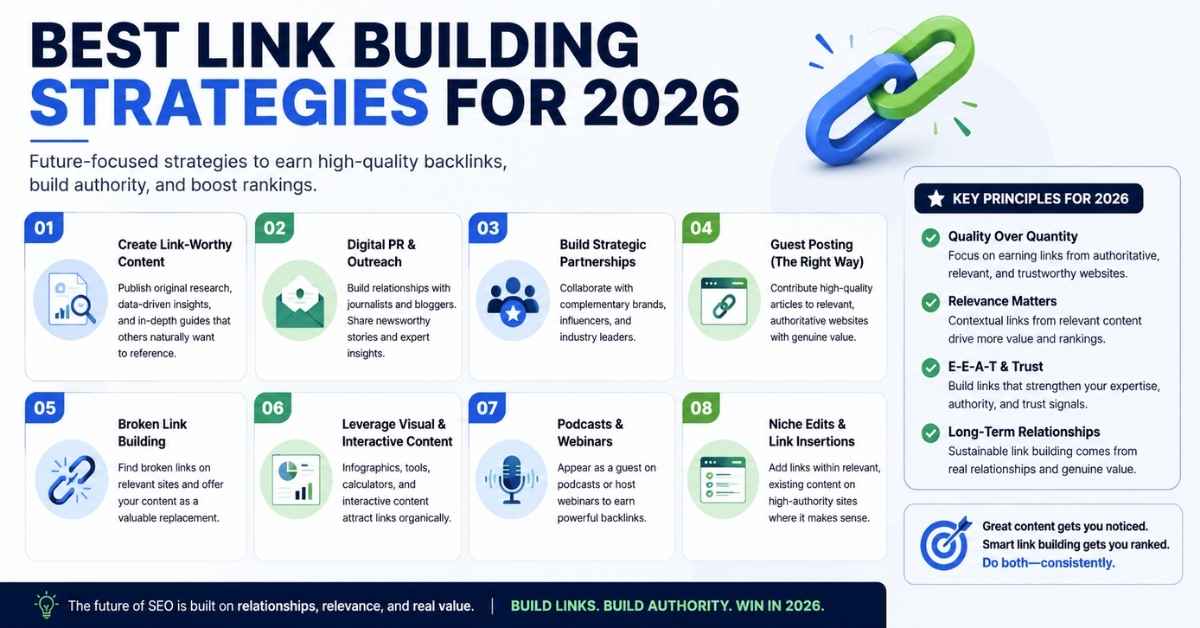
LEARN MORE: Best Link Building Strategies for 2026
Is White Hat Link Building Worth the Investment?
Absolutely—if your goal is sustainable growth.
Unlike manipulative SEO tactics that may deliver temporary gains, white hat backlinks continue providing value long after they're earned.
When You Can Do It Yourself
Consider building backlinks yourself if:
- You have time to create high-quality content.
- You're comfortable with outreach.
- You're building a personal blog or small business website.
- You enjoy networking within your industry.
When Hiring an SEO Professional Makes Sense
Hiring an experienced SEO or digital PR team may be worthwhile if:
- You're in a highly competitive industry.
- You need to scale link acquisition.
- Your team lacks outreach experience.
- You want access to established publisher relationships.
Cost vs. Long-Term ROI
Although ethical link building requires time and effort, it often delivers better long-term returns than paid advertising because quality backlinks can continue driving rankings and referral traffic for years.
The Future of White Hat Link Building
As Google's algorithms evolve, the focus continues shifting toward quality, expertise, and user value.
Future trends include:
- AI-assisted content supported by human expertise.
- Greater emphasis on topical authority.
- Stronger importance of brand mentions and digital reputation.
- Increased value of digital PR and original research.
- More sophisticated evaluation of editorial relevance.
- Continued prioritization of helpful, people-first content.
Websites that consistently publish valuable content and earn genuine recommendations will remain competitive regardless of future algorithm updates.
Frequently Asked Questions
What is white hat link building in SEO?
White hat link building is the process of earning backlinks ethically through valuable content, genuine outreach, and strategies that comply with Google's guidelines.
Is guest posting considered white hat?
Yes, guest posting is considered white hat when you publish original, high-quality content on relevant websites for the benefit of readers—not solely to acquire backlinks.
Are paid backlinks white hat?
Generally, paid backlinks intended to manipulate rankings violate Google's guidelines. Sponsored links should use the appropriate attributes, such as rel="sponsored".
How many backlinks do I need?
There is no fixed number. A few highly relevant editorial backlinks often outperform hundreds of low-quality links.
Can I rank without backlinks?
Yes, it's possible for low-competition keywords, but backlinks remain one of the strongest ranking signals for competitive searches.
What is the safest way to build backlinks?
Creating linkable assets, conducting original research, publishing helpful content, and building genuine relationships are among the safest and most effective methods.
Does white hat link building still work in 2026?
Yes. Ethical link building remains one of the most effective long-term off-page SEO strategies because it aligns with Google's emphasis on relevance, trust, and user value.
How do I know if a backlink is high quality?
A quality backlink comes from a relevant, trustworthy website, is placed naturally within useful content, has contextual relevance, and can drive referral traffic.
Final Thoughts
White hat link building is more than an SEO tactic—it's a long-term strategy for building authority, trust, and sustainable organic growth. Instead of chasing shortcuts or risky backlink schemes, focus on creating content that people genuinely want to reference and share.
Success doesn't happen overnight, but consistent effort pays off. By earning high-quality editorial backlinks, publishing valuable resources, and building authentic relationships within your industry, you create a backlink profile that withstands algorithm updates and supports lasting search visibility.
Your 5-Step Action Plan
- Audit your current backlink profile and identify weak or toxic links.
- Create one exceptional linkable asset, such as an in-depth guide, original research, or a free tool.
- Find relevant websites, journalists, and resource pages that would benefit from your content.
- Build relationships before asking for backlinks by engaging with industry experts and publishers.
- Measure and refine your strategy using tools like Google Search Console, Ahrefs, or Semrush.
Remember, the best backlinks are earned—not manufactured. When your content consistently solves real problems and provides unique value, white hat link building becomes a natural outcome rather than a difficult task, helping your website achieve stronger rankings, increased organic traffic, and long-term SEO success.
Expert in SEO and link building with over 10 years of experience helping businesses grow their organic presence.