Editorial Links vs Guest Posts: Which Is Better for SEO in 2026?
Write a compelling excerpt...
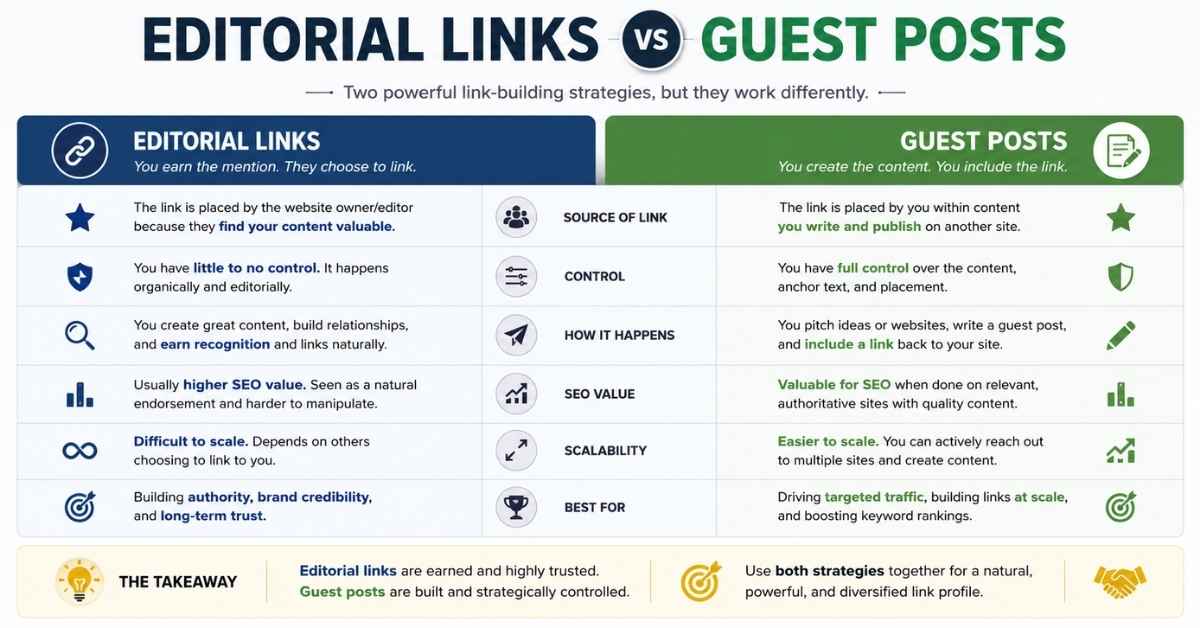
Editorial Links vs Guest Posts is one of the most important comparisons for anyone building a long-term SEO strategy. Editorial links generally carry more authority because they are earned naturally through editorial decisions, while guest posts offer greater control, scalability, and opportunities to build topical authority. Rather than choosing one over the other, the best approach depends on your website's goals, budget, and competition. In many cases, combining both strategies creates a stronger, more natural backlink profile that supports sustainable organic rankings.
Backlinks remain one of Google's strongest ranking signals, but not all links are created equal. As search algorithms become smarter, factors like contextual relevance, editorial standards, user value, and E-E-A-T (Experience, Expertise, Authoritativeness, and Trustworthiness) matter more than simply collecting links from high-authority websites. This guide explains the differences between editorial backlinks and guest posting, how Google views each, and which strategy delivers the best results in 2026.
Editorial Links vs Guest Posts: The Short Answer
If you're looking for a quick answer, here's what you need to know:
- Choose editorial links if your goal is to build brand authority, earn highly trusted backlinks, and strengthen long-term SEO performance.
- Choose guest posts if you want a scalable way to earn contextual backlinks, improve topical authority, and reach new audiences.
- Use both together if you want a balanced backlink profile that looks natural to search engines and supports consistent organic growth.
Instead of asking which strategy is universally better, ask which one aligns with your current stage of growth. A new website often benefits from carefully selected guest posts, while an established brand may gain more value from earning editorial mentions on respected publications.
Understanding the Two Link Types
What Is an Editorial Link?
An editorial link is a backlink that another website adds voluntarily because they believe your content deserves to be referenced. You don't control the placement or anchor text, making these links one of the strongest indicators of genuine authority.
For example, imagine you publish an original industry study with unique statistics. A well-known marketing publication cites your research in one of its articles and links back to your website. That backlink is an editorial link because it was earned through the quality of your content rather than negotiated placement.
Editorial links usually come from:
- Industry publications
- News websites
- Educational resources
- Research reports
- Expert blogs
- Digital PR campaigns
Why Editorial Links Matter
Editorial links demonstrate several signals Google values:
- Editorial discretion
- Topical relevance
- Content quality
- Natural link acquisition
- Brand credibility
- Contextual placement
Because these links are earned rather than requested, they often pass stronger trust signals and contribute to long-term search visibility.
What Is a Guest Post?
A guest post is content you create for another website in your industry, typically including one or more backlinks to your own site. Unlike editorial links, guest posting gives you more control over the content, anchor text, and target pages.
A quality guest posting campaign focuses on publishing valuable, original content for websites with real audiences and strong editorial standards.
Guest posting helps you:
- Build topical authority
- Earn contextual backlinks
- Increase brand awareness
- Reach new readers
- Generate referral traffic
- Diversify your backlink profile
When done correctly, guest posting remains one of the most effective link-building strategies because it combines SEO benefits with content marketing and audience growth.
Common Misconceptions About Guest Posts
Many people believe guest posts no longer work because of Google's spam policies. In reality, Google doesn't discourage guest posting itself—it discourages low-quality, manipulative guest posting done solely to create backlinks.
A guest article written for a relevant website that genuinely helps readers can still provide significant SEO and branding benefits.
Editorial Links vs Guest Posts at a Glance
| Factor | Editorial Links | Guest Posts |
| Authority | Very High | High |
| Trust Signals | Excellent | Strong |
| Editorial Control | Low | High |
| Scalability | Limited | High |
| Cost | Often Higher | Moderate |
| Link Longevity | Long-Term | Long-Term (depends on publisher) |
| Referral Traffic | High | Moderate to High |
| Brand Visibility | Excellent | Excellent |
| Outreach Difficulty | High | Moderate |
| Best For | Authority Building | Topical Authority & Growth |
| Risk Level | Very Low | Low (when done correctly) |
| ROI | High Over Time | High with Consistency |
Key Takeaway
Editorial links are generally harder to earn but provide exceptional authority. Guest posts require more outreach and content creation but offer predictable opportunities to grow your backlink profile over time.
How Google Evaluates Editorial Links and Guest Posts
Google doesn't rank websites based solely on the number of backlinks they receive. Instead, it evaluates the quality, relevance, context, and natural placement of those links.
Editorial Signals That Build Trust
Editorial backlinks naturally demonstrate several positive ranking signals.
These include:
- Relevant contextual placement
- Mentions within useful content
- Natural anchor text
- High editorial standards
- Strong topical relevance
- Genuine recommendations
For instance, if an authoritative cybersecurity blog references your original research on data privacy, Google is more likely to interpret that backlink as a meaningful endorsement rather than an artificial attempt to manipulate rankings.
When Guest Posts Support SEO
Guest posting remains valuable when it's approached with readers in mind instead of search engines alone.
A high-quality guest post should:
- Solve a real problem.
- Offer original insights.
- Match the publisher's audience.
- Contain naturally placed backlinks.
- Maintain editorial quality.
- Add value beyond SEO.
Publishing thoughtful content on respected industry websites also strengthens your reputation as a knowledgeable voice within your niche.
Practices That Can Trigger Link Spam Concerns
Even legitimate link-building strategies can become risky if abused.
Avoid practices such as:
- Publishing on irrelevant websites
- Buying links from obvious link farms
- Using identical anchor text repeatedly
- Creating thin or duplicate guest articles
- Participating in private blog networks
- Prioritizing quantity over quality
A natural backlink profile always includes a mix of editorial backlinks, guest posts, brand mentions, digital PR placements, and contextual links.
Editorial Links vs Guest Posts by SEO Goal
Different business goals require different link-building strategies.
Building Topical Authority
If your objective is becoming a recognized resource within a niche, guest posting offers consistent opportunities to publish content across relevant websites.
Regular guest contributions reinforce your expertise and create semantic connections between your website and your industry.
Best Choice: Guest Posts
Increasing Organic Rankings
Editorial backlinks often carry stronger authority because they're earned through editorial judgment rather than direct outreach.
A single editorial mention from a respected publication can significantly strengthen your site's authority.
Best Choice: Editorial Links
Growing Brand Credibility
Being mentioned naturally by trusted publications sends strong credibility signals to both users and search engines.
Editorial coverage also improves brand recognition beyond SEO.
Best Choice: Editorial Links
Driving Referral Traffic
Both strategies generate referral traffic, but editorial links often appear within highly engaging content that readers already trust.
Meanwhile, guest posts allow you to educate readers while introducing your brand to a targeted audience.
Best Choice: Tie (Depends on Placement Quality)
Supporting Long-Term SEO
Long-term SEO success depends on maintaining a diverse backlink profile rather than relying on a single tactic.
Combining earned editorial mentions with carefully selected guest posts creates a natural pattern that aligns with modern search engine expectations.
Best Choice: Combination Strategy
Scaling Link Acquisition
Editorial backlinks are difficult to scale because they rely on publishers choosing to reference your content.
Guest posting, however, allows businesses to build relationships with industry websites and consistently publish valuable articles.
Best Choice: Guest Posts
Cost, Effort, and Return on Investment
One of the biggest questions businesses ask is whether editorial links justify their higher investment.
The answer depends on your objectives and available resources.
| Factor | Editorial Links | Guest Posts |
| Average Investment | Higher | Moderate |
| Outreach Difficulty | High | Medium |
| Content Requirements | Exceptional | High Quality |
| Success Rate | Lower | Higher |
| Long-Term Value | Excellent | Strong |
| Scalability | Limited | High |
| Referral Traffic | High | Moderate to High |
| Expected ROI | Excellent Over Time | Excellent with Consistency |
For startups and small businesses, guest posting often provides faster momentum because it offers predictable opportunities to earn relevant backlinks. Established brands, however, frequently benefit more from investing in original research, digital PR campaigns, and thought leadership that naturally attract editorial links.
Ultimately, the strongest backlink strategy isn't about choosing one method over the other. It's about creating valuable content, building relationships with reputable publishers, and earning links that genuinely improve the user experience while strengthening your website's authority, trust, and topical relevance.
Which Strategy Fits Your Business?
Every website has different goals, resources, and competition levels. Choosing the right link-building approach depends on where your business is today—not where you want it to be in five years.
New Websites
A new website usually has limited authority and brand recognition. Earning editorial backlinks can be challenging because publishers are less likely to reference an unknown brand.
Start by publishing high-quality content on reputable niche websites through guest posting. This helps establish topical authority, earn contextual backlinks, and build relationships with publishers.
Recommended Link Mix: 70% Guest Posts + 30% Editorial Links
Local Businesses
Local businesses benefit from a combination of guest posts and editorial mentions from regional news websites, local blogs, and community organizations.
Focus on backlinks that improve both local SEO and customer trust.
Recommended Link Mix: 60% Guest Posts + 40% Editorial Links
SaaS Companies
SaaS brands compete in highly competitive search results where authority matters. Publishing original research, industry reports, and data-driven content can naturally attract editorial links.
Support those efforts with strategic guest posting on relevant marketing and technology websites.
Recommended Link Mix: 50% Editorial Links + 50% Guest Posts
Ecommerce Stores
Online stores should prioritize product-related content, buying guides, and niche collaborations while also investing in digital PR campaigns that generate editorial mentions.
Recommended Link Mix: 60% Editorial Links + 40% Guest Posts
Affiliate Websites
Affiliate marketers often need scalable link acquisition to compete for commercial keywords.
Guest posting works well for expanding topical relevance, while editorial links strengthen overall authority.
Recommended Link Mix: 60% Guest Posts + 40% Editorial Links
Enterprise Brands
Large brands typically have the resources to create newsworthy campaigns, proprietary research, and thought leadership content.
Editorial links become increasingly valuable because they reinforce brand authority and trust.
Recommended Link Mix: 70% Editorial Links + 30% Guest Posts
Real-World Scenarios
Scenario 1: Startup With a Limited Budget
Imagine you're launching a new project management software.
Instead of spending thousands on PR campaigns, you contribute insightful guest posts to respected productivity and technology blogs. Over time, these contextual backlinks improve your site's visibility and establish credibility within your niche.
Scenario 2: Established Brand Seeking Authority
A well-known cybersecurity company publishes an annual threat report with original statistics. Major technology publications reference the report, creating editorial backlinks that significantly strengthen the company's authority.
Scenario 3: Highly Competitive Industry
An ecommerce brand selling fitness equipment combines consistent guest posting with digital PR campaigns. Guest posts build topical authority, while editorial mentions from health and lifestyle publications improve trust and drive referral traffic.
The result is a diversified backlink profile that supports sustainable SEO growth.
Common Mistakes That Reduce Backlink Value
Even strong backlink strategies can fail if common mistakes are ignored.
Avoid these pitfalls:
- Choosing websites based only on Domain Authority or Domain Rating
- Ignoring topical relevance
- Publishing low-quality guest posts
- Using repetitive anchor text
- Buying links from spammy networks
- Expecting instant ranking improvements
- Neglecting relationship building with publishers
- Prioritizing quantity over quality
A handful of highly relevant backlinks often provide more value than dozens of low-quality placements.
LEARN MORE: Guest Posting Mistakes to Avoid
A Practical Decision Framework
If you're still unsure which approach to prioritize, use this framework.
| Your Goal | Best Strategy |
| Build authority quickly | Editorial Links |
| Scale link building | Guest Posts |
| Limited marketing budget | Guest Posts |
| Increase brand trust | Editorial Links |
| Improve topical authority | Guest Posts |
| Create a natural backlink profile | Combination of Both |
| Long-term SEO growth | Editorial Links + Guest Posts |
The most successful websites rarely rely on a single tactic. They combine multiple link-building strategies to create a backlink profile that looks natural and supports long-term rankings.
Editorial Links and Guest Posts Work Better Together
Many marketers make the mistake of treating editorial links and guest posts as competing strategies. In reality, they complement each other.
A balanced backlink profile may include:
- Editorial backlinks
- Guest posts
- Digital PR mentions
- Brand citations
- Resource page links
- Industry directory listings
- Contextual backlinks
This diversity demonstrates natural growth and reduces dependence on any single acquisition method.
For example, guest posts can help you establish expertise in your niche, while editorial links reinforce that expertise when authoritative publications begin referencing your work organically.
How to Evaluate Any Link Opportunity
Before pursuing any backlink, ask yourself these questions:
Link Quality Checklist
- Is the website topically relevant?
- Does it receive genuine organic traffic?
- Are the articles professionally edited?
- Does the publisher maintain high editorial standards?
- Will the backlink appear naturally within valuable content?
- Is the audience relevant to your business?
- Does the site have a trustworthy reputation?
- Will the page likely remain indexed over time?
- Is the anchor text natural and descriptive?
- Does this backlink add value for readers?
If the answer to most of these questions is yes, the opportunity is likely worth pursuing.
Frequently Asked Questions
Are editorial links always better than guest posts?
Not always. Editorial links generally carry stronger trust signals because they are earned naturally, but guest posts remain highly effective for building topical authority, expanding reach, and earning relevant contextual backlinks.
Can guest posts still improve rankings in 2026?
Yes. High-quality guest posts published on relevant websites with genuine editorial standards continue to support organic rankings, referral traffic, and brand awareness.
Which backlink type offers better ROI?
Editorial links often provide greater long-term value, while guest posts typically deliver faster and more scalable results. The best return on investment usually comes from combining both approaches.
Are paid guest posts against Google's guidelines?
Google discourages manipulative link schemes designed solely to influence rankings. Focus on creating valuable content for reputable publishers rather than buying links from low-quality networks.
How many editorial links should a website aim for?
There is no ideal number. A few authoritative editorial backlinks can outperform dozens of low-quality links. Prioritize relevance, quality, and user value over quantity.
Should new websites prioritize guest posts or editorial links?
Most new websites should begin with strategic guest posting to build visibility and relationships while gradually earning editorial links through exceptional content and digital PR.
Final Verdict
When comparing Editorial Links vs Guest Posts, there isn't a universal winner. Each strategy serves a different purpose within a successful SEO campaign.
Choose editorial links if your primary goal is building authority, trust, and long-term organic visibility. Because these backlinks are earned through editorial judgment, they often carry stronger credibility and reinforce your brand's reputation.
Choose guest posts if you need a scalable way to build topical authority, earn contextual backlinks, and reach new audiences through valuable content.
For most businesses, the smartest strategy is to combine both. Publish outstanding content that naturally attracts editorial mentions while consistently contributing high-quality guest articles to reputable websites in your niche. This balanced approach creates a diverse backlink profile, strengthens E-E-A-T, improves search visibility, and positions your website for sustainable SEO success in 2026 and beyond.
Expert in SEO and link building with over 10 years of experience helping businesses grow their organic presence.